Costs
Part of Desk noise test: five stages, from vocabulary to a repeatable record
Is a desk noise test worth paying for, and when does the cost make sense?
A free app answers most household questions. What the paid options add, when a measurement is worth buying, and why a shared building changes the answer.
A desk noise test is worth paying for when the result has to convince someone else. If it only has to convince you, a free app on the phone in your pocket settles most household questions. The prices below decide which rung you actually need.
What to take away
- A free app on a phone you already own answers most household questions.
- Paying buys defensibility, not accuracy you can feel.
- In a shared building the cost is usually the argument, not the instrument.
- Anything you cannot repeat has cost you money for nothing.
- A calibrated microphone for a phone costs about $20 to $25. A Class 2 meter runs about $100 to $500, plus $75 to $150 a year for calibration.
- A consultant's written report typically starts near $400 and can pass $2,000.
The ladder
What it gives you
- Free app, built-in microphone
- Before and after in one room, free. The NIOSH Sound Level Meter app for iOS needs no extra hardware
- App with external calibrated microphone
- Numbers closer to a reference. The Dayton Audio iMM-6 costs about $20, the miniDSP UMIK-1 about $120, and supporting apps typically under $20
- Handheld meter
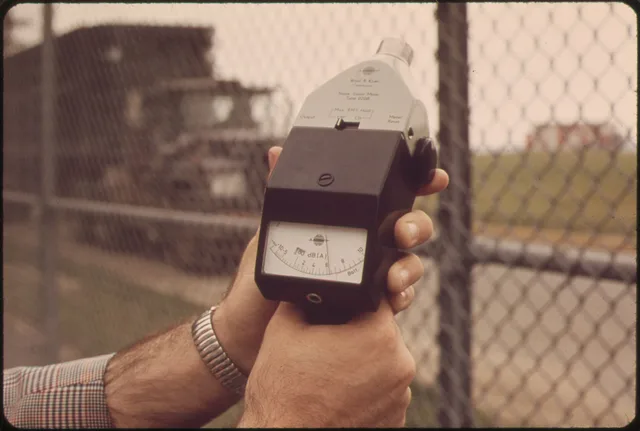
- A device with a calibration record. Class 2 meters from Extech, Reed and Galaxy Audio run about $100 to $500, and annual calibration adds $75 to $150
- Wearable dosimeter
- All-day exposure in place of spot checks. Units from 3M, Casella and Larson Davis typically cost $1,000 to $2,500
- Hired survey
- A report with a method and a signature. A single home visit typically runs $400 to $1,500, a dispute-grade report $1,500 to $5,000
When it is worth it
- Free app, built-in microphone
- Almost always the right start
- App with external calibrated microphone
- When someone else must accept them
- Handheld meter
- Repeated measurements over years
- Wearable dosimeter
- Complaints about a pattern, not a peak
- Hired survey
- Formal disputes and building work
Most people need the first rung and buy the third.
Desk noise test options
Free app
- What it gives
- Before and after
- When worth it
- Almost always
Calibrated app
- What it gives
- Reference numbers
- When worth it
- Others must accept
Handheld meter
- What it gives
- Calibration record
- When worth it
- Repeated over years
Hired survey
- What it gives
- Signed report
- When worth it
- Formal disputes
What paid accuracy actually adds
Apps differ, and the differences have been measured rather than guessed. A study of sound level meter apps for occupational use assessed three iOS applications, including the one NIOSH publishes. It set out to tell health and safety professionals whether such apps are suitable for assessing occupational noise exposure, rather than treating them as toys.
The same framing fits a household budget. An app does not have to match a meter. It has to be good enough for the decision in front of you.
Paid apps are cheap. Most cost under $20, as a one-time purchase or a small yearly subscription. The money rarely buys accuracy on its own.
Accuracy comes from the microphone. The Dayton Audio iMM-6 plugs into a phone for about $20. The miniDSP UMIK-1, a USB measurement mic, runs about $120. Each needs an app that supports it, such as Studio Six Digital's AudioTools, which starts near $20 with extra modules sold separately.
Continuous measurement, and what it costs in practice
Wearable monitor accuracy
±2 dBA vs Class 2 meter
Continuous all-day coverage
Low cost, modest accuracy
Shows patterns, not peaks
A design study built a wearable, smartphone-based noise monitoring system for agricultural workers that measures exposure through the day to within about plus or minus 2 A-weighted decibels of a Class 2 sound level meter. It collects data to a server and presents it back to the worker.
The trade it makes is the point: modest accuracy, continuous coverage, low cost. For a desk, continuous coverage is usually the thing worth having, because the complaint is about a pattern rather than a peak.
Hardware dosimeters do the same job for a price. Units from 3M, Casella and Larson Davis typically run $1,000 to $2,500, and they still need calibration. A phone-based system skips that cost, which is why the design study exists.
When a shared building changes the arithmetic
In a shared building, the measurement is not for you. It is for a landlord, manager, or neighbor, and its value depends on whether they accept it. That pushes you up the ladder for reasons unrelated to physics.
Before paying, ask who must be convinced and what they would accept. The answer is sometimes a written log, not an instrument.
The quote usually settles it. A single visit from an acoustic consultant, with a written report, typically starts near $400 in most US markets and can pass $2,000 when the report has to name its method and instrument class. The National Council of Acoustical Consultants keeps a directory of firms that do the work.
Costs people forget
- Time. Each proper measurement round is an hour once you include setup and notes.
- Repetition. One reading is not a result, so budget for at least two.
- Calibration, if you buy a meter. It is a recurring cost rather than a single payment: about $75 to $150 per meter per year, plus shipping. A portable acoustic calibrator to check the meter costs about $150 to $300.
- The second test after the change, which is the only reason the first one had value.
The setup work itself is described in setting up a desk noise test. The stages a full test goes through are in what happens at each stage.