Industry
Part of Real published field research beats an invented workspace case study
A workspace case study makes the best brief you can hand a contractor
Quiet workspace case studies businesses: research will not tell a contractor what to build, but it will tell you what to ask for and what to measure.
Nobody has been hired for this site and no company is named. What follows is how to use published research when you do brief someone, because a brief written from research is specific in the ways that matter and vague in the ways that do not.
What to take away
- A study gives you the vocabulary and the measurement plan. It does not give you a design.
- Ask for measurements before and after, in the same positions, as part of the scope.
- Structure-borne problems need a different brief from airborne ones, and studies of vibration make that clear.
- Evaluate the finished work against expectations you wrote down first.
Borrow the measurement plan, not the conclusion
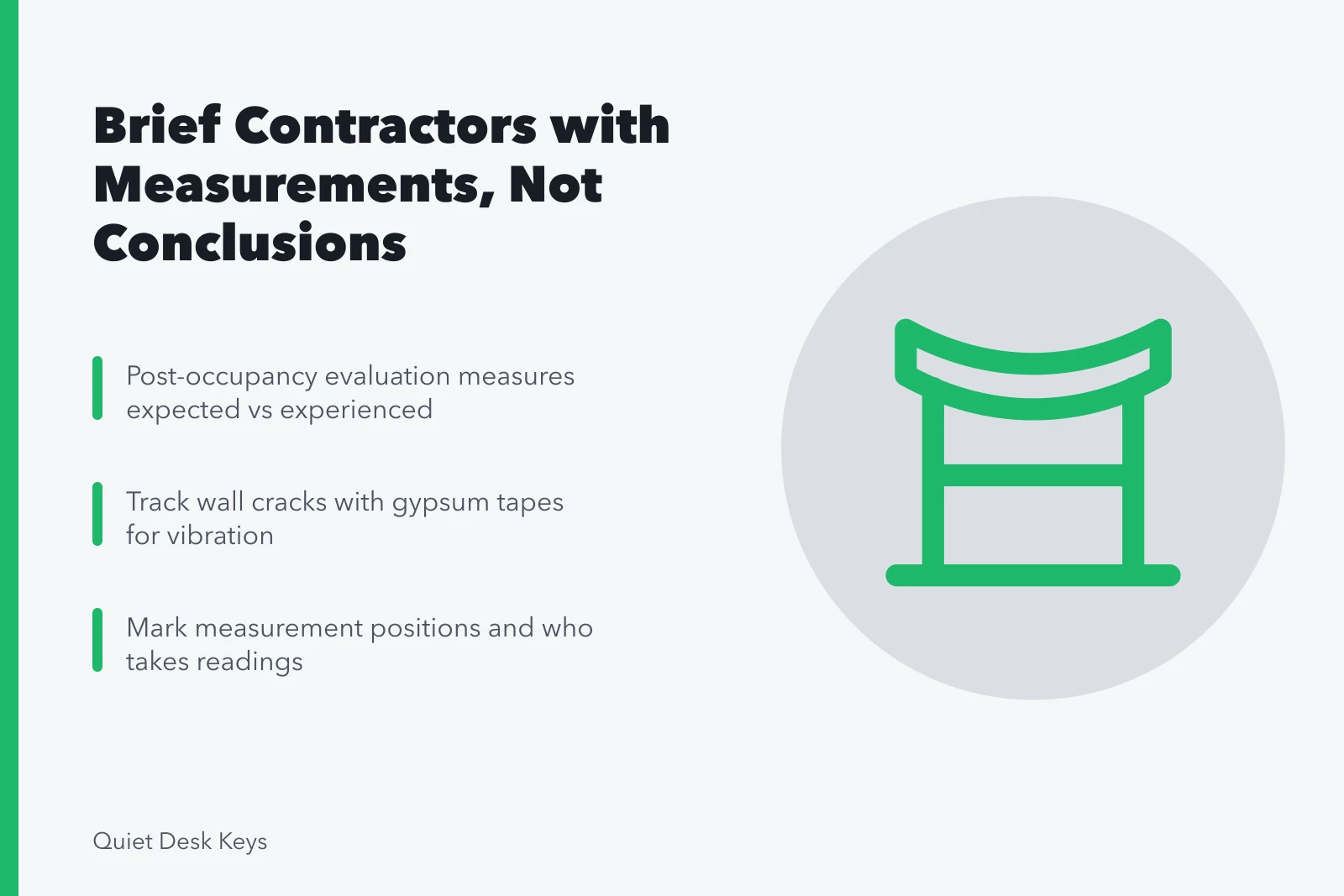
The most transferable part of any field study is how it decided whether something worked. Post-occupancy evaluation is the formal name for that step. One worked example evaluated a university dormitory using a gap theory based method that measured both what occupants expected and what they experienced, so the gap between the two became the result.
Write down what you expect the work to achieve before it starts, then compare afterwards. Without the first half, the second is an argument.
Get the path right before you write the brief
Airborne and structure-borne problems are different jobs, and mixing them up produces work that cannot help.
A case study assessing traffic-induced vibrations in a residential building took acceleration measurements inside the building and tracked existing wall cracks with control gypsum tapes to see whether damage was propagating. Nothing about that resembles treating a room with absorbers. A desk noise test separates airborne from structure-borne paths the same way, so the five stages matter.
If your complaint travels through the structure, the brief is about isolation and mass. An acoustic panel supplier is the wrong person to talk to.
The cheapest way to tell the two apart is to put a hand on the wall or the desk while the sound is happening. If you can feel it, no amount of surface treatment inside the room will make much difference.
What a good brief contains
- The complaint, in the words of the person who has it.
- The path the sound takes, as far as you can establish it.
- A list of physical changes with locations and materials.
- The measurement positions, marked, and who takes the readings.
- What you expect to change, written before the work.
- What happens if it does not.
What to leave out
Leave out the study; a contractor does not need a citation, and quoting research at a trade tends to produce agreement rather than accuracy. Take the method and express it as requirements.
Leave out product names too, unless a specific material is required, because naming products invites a quote for those products rather than for the outcome you wanted.
After the work
Repeat the measurements from the marked positions and ask the person who complained. Compare against what you wrote in advance. If the gap is large, that is information for the next stage, not an accusation.
The common errors in hiring are listed in mistakes people make when hiring help, and the argument for using published research is in published field studies worth reading.