Rules
Part of Which silent switch type makes sense for which typist, in plain terms
Silent keyboard switches rules: who sets the limit?
Silent keyboard switches rules have no universal noise cap: ISO 7779 and ECMA-74 measure sound, while OSHA rules address workplace hearing exposure.
Looking for silent keyboard switches rules? No public standard sets a universal maximum keyboard-noise level. ISO 7779 and ECMA-74 provide methods for measuring airborne noise from information technology and telecommunications equipment; they do not prescribe a keyboard pass/fail limit. The practical rules depend on the setting, so it is worth knowing who has authority there.
What to take away
- No standard governs keyboard noise, so nobody can be in breach of one.
- What binds you is a contract, a policy, or a person, and those respond to different arguments.
- Occupational rules cover ergonomics through a general duty rather than a specific standard.
- Evidence that particular equipment prevents injury is weaker than the marketing suggests, which is part of why prescriptive rules do not exist.
Who actually sets the bar
What it can require
- Lease or house rules
- Quiet hours, alterations, floor coverings
- Employer or office policy
- Equipment, layout, shared-space etiquette
- Coworking agreement
- Zone rules, call booths, headphone norms
- The person next to you
- Everything, in practice
What moves it
- Lease or house rules
- A written request, and reversible work
- Employer or office policy
- An assessment and a written record
- Coworking agreement
- The operator, not the other members
- The person next to you
- A conversation and one change at a time
The last row settles most cases and is the one people avoid.
Who sets the noise bar
Source
- Lease or house rules
- Quiet hours, floor coverings
- Employer or office policy
- Equipment, layout, etiquette
- Coworking agreement
- Zone rules, call booths
- Person next to you
- Everything, in practice
Can require
- Lease or house rules
- Written request, reversible work
- Employer or office policy
- Assessment and written record
- Coworking agreement
- The operator, not members
- Person next to you
- Conversation, one change
What moves it
- Lease or house rules
- Employer or office policy
- Coworking agreement
- Person next to you
How workplace rules handle this
At work, ergonomics falls under a general obligation, not a numeric standard, and OSHA details its approach in the ergonomics standards and enforcement questions.
OSHA's four-part test
- Does a hazard exist?
- Is the hazard recognized?
- Does it cause serious physical harm?
- Is there a feasible way to reduce it?
That is the General Duty Clause, Section 5(a)(1) of the OSH Act (29 U.S.C. § 654(a)(1)), not a rule about keyboards. It requires employers to keep workplaces free of serious recognized hazards and is generally cited when no specific OSHA standard applies. It does not set a switch-specific sound limit.
What the ergonomics evidence does—and does not—say
The Cochrane review by Hoe, Urquhart, Kelsall, and Sim, “Ergonomic interventions for preventing work-related musculoskeletal disorders of the upper limb and neck among office workers,” notes that between twenty and sixty percent of office workers report such disorders. The review concerns ergonomic interventions and injury prevention, not keyboard acoustics.
Regulators do not usually write prescriptive rules on top of unclear evidence. That is a reasonable position, and it leaves the decision with you.
What to do instead of looking for a rule
- Ask the person who is bothered what they hear and when.
- Change one thing, then ask again.
- Put anything involving a landlord or an employer in writing.
- Keep the record, because a written history is what turns a preference into a case.
Where this leaves switch choice
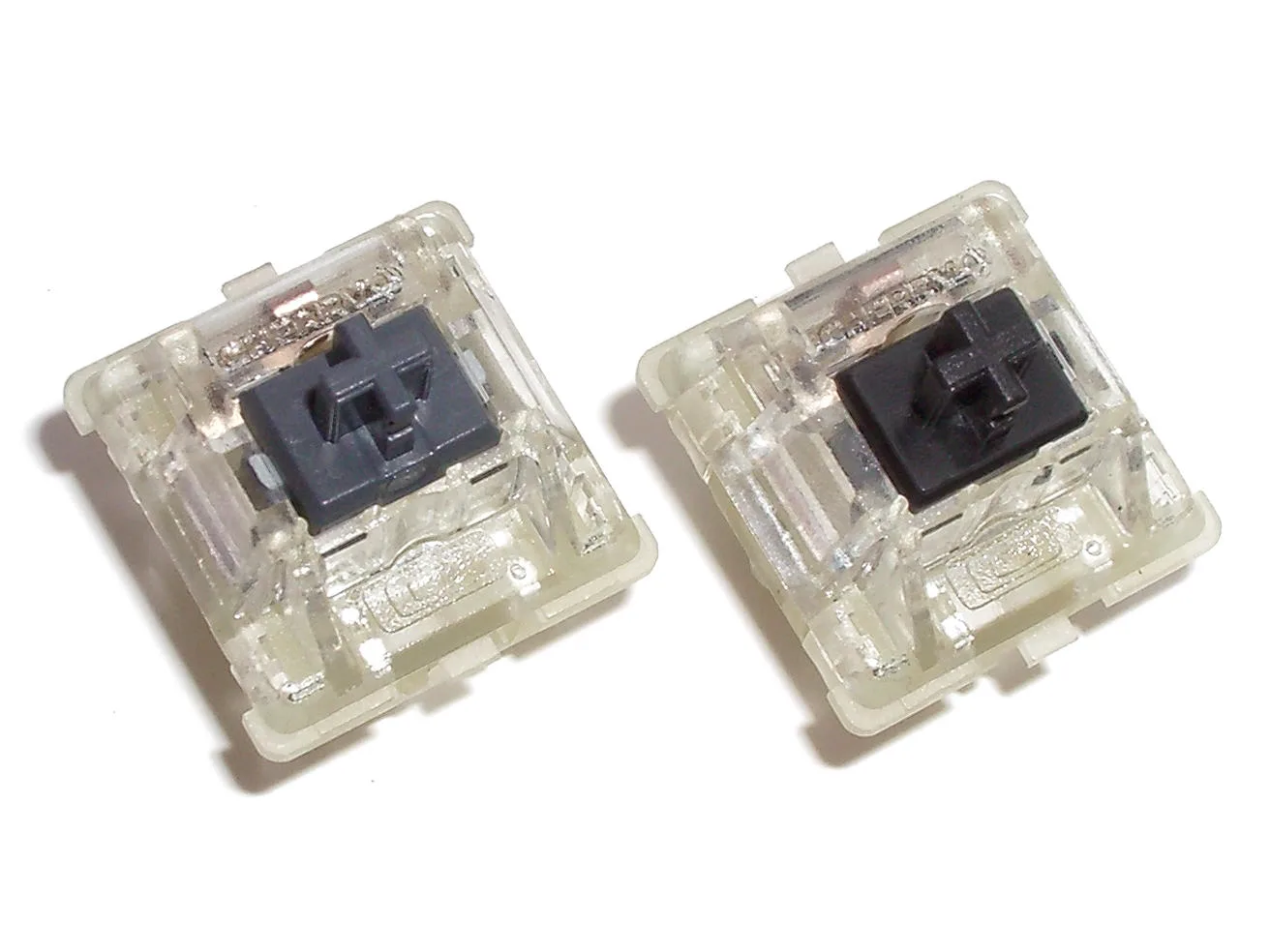
Switch choice is a courtesy decision and a comfort decision, not a compliance decision. Cherry MX Silent Red is one example of a damped linear switch, but its label creates no special compliance category and does not guarantee a silent desk. Choose the family that suits your hands and your hours, then fix the desk, which is usually louder. The family comparison is in which silent switch type makes sense, and the long-term view is in planning a switch choice you will not redo.