Guides
Part of Keyboard brands in 2027: four checks that need no company name
Four decisions that outlast any keyboard brand: what to standardize on
Choosing hardware for: companies get bought and product lines get dropped without warning. How to buy so that the disappearance of a manufacturer costs you nothing.
Assume the company will be gone. Not out of pessimism, but because it is the cheapest planning assumption available and it costs nothing if you are wrong. Everything below follows from it.
What to take away
- Standards outlive companies. Buy to a standard and a vendor's exit is somebody else's problem.
- Buy the spare part at the same time as the product, or accept that you will not get one.
- Prefer designs that have not changed recently, because stability is what makes parts available.
- Office and workplace fashions turn over faster than the furniture does. Do not buy into a trend you cannot reverse.
What to standardize on
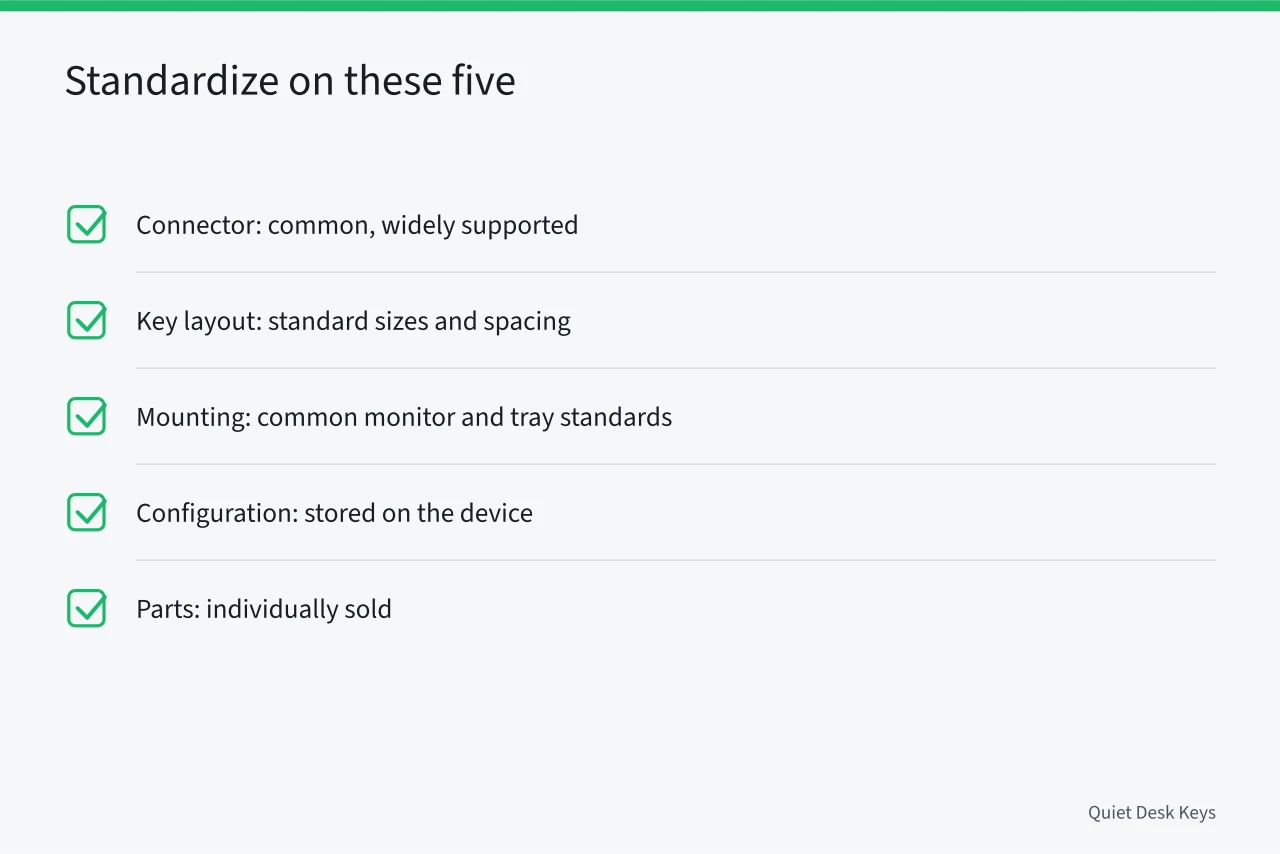
| Element | The standard to prefer | Why |
|---|---|---|
| Connector | Common, widely supported | Cables and adapters stay available |
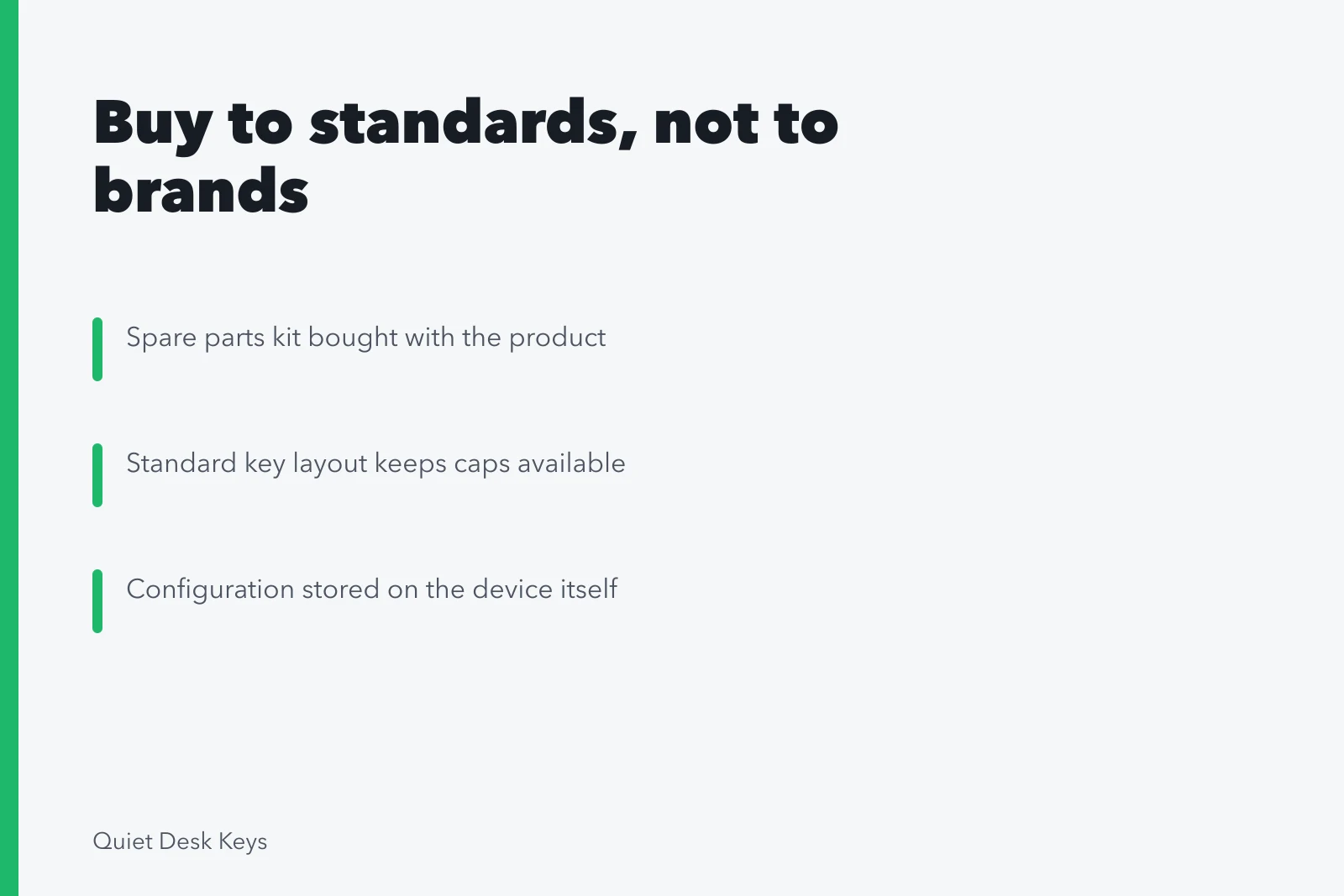
| Key layout | Standard sizes and spacing | Replacement caps exist for decades |
| Mounting | Common monitor and tray standards | The next screen and desk will fit |
| Configuration | Stored on the device | Works when the software is gone |
| Parts | Individually sold | A failure is a part, not a purchase |
None of these requirements are exotic. You can check each one on a product page before spending anything.
A standard is a promise kept by an industry, not a company. Standards survive acquisitions, discontinuations, and rebrands that individual products do not. Comparing desk and chair specs is the same exercise: turn each number into something you can check in your own room.
Fashions change faster than furniture
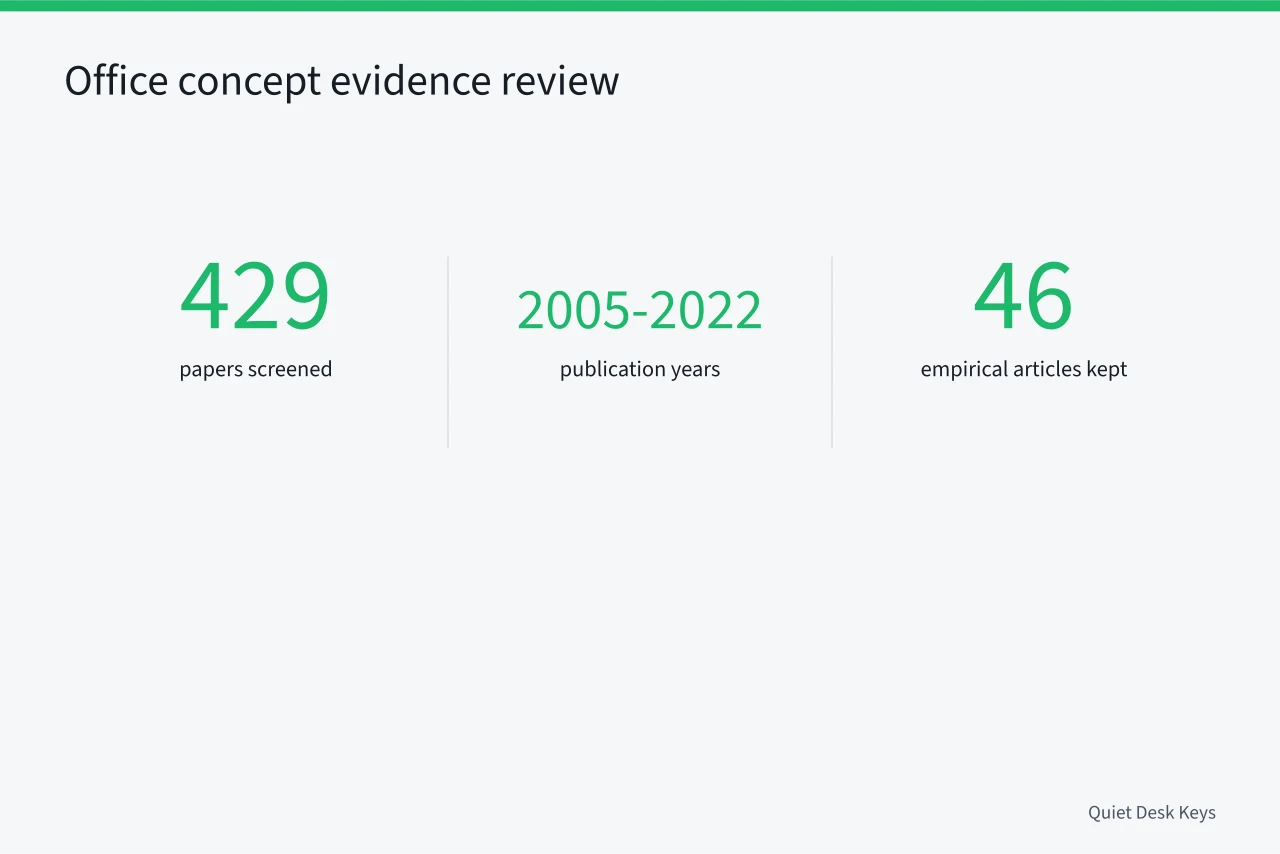
Whole office concepts get adopted and abandoned within a working career, and the evidence behind them is more mixed than the sales pitch. A systematic review of office concepts screened 429 published papers between 2005 and 2022 and narrowed them to 46 empirical articles to examine how open-plan, activity-based and single-office arrangements relate to individual and organizational performance.
Its own finding is that these concepts do not all deliver what is claimed for them. So be careful with anything that commits you: a layout, a furniture system or an input device that only makes sense inside one current fashion is a bet.
Design for the people, not the product
Equipment outlasts jobs and rooms, and the people using it change. Indiana University's ergonomics guidance says: workstations should be designed to accommodate the employees who actually use them, not an average or stereotypical user.
They should also allow the full range of movements the job requires. A setup that fits only one specific person becomes a problem when that person changes desk, changes job, or gets older.
The two purchases that make everything else reversible
Buy the spare parts kit and buy a standard layout. Those two decisions convert almost every future failure into a small parcel. Everything else, including which company made it, becomes a preference rather than a risk. Write down where the spares are kept, since the box is useless if nobody can find it in three years.
How to judge that company in the first place is in judging a keyboard maker, and the equivalent thinking applied to switches is in planning a switch choice you will not redo.
Common questions
Should I avoid new companies? No, but treat them as higher risk on parts. A new maker with published parts is safer than an old one without.
What if a product uses a proprietary connector? Buy a spare cable at the same time, or buy something else. Proprietary cables are the most common way a working device becomes scrap.
Is open firmware worth seeking out? It helps, because configuration survives the vendor. It matters less if the board already stores its settings on the device.
How long should I expect a keyboard to last? Longer than the company, if it is serviceable. That is the whole argument for buying serviceable things.