Features
Silent workspace ideas grouped by the noise problem they solve
Ideas for a quieter workspace grouped by the problem they solve: sound reaching you, sound leaving you, and the sound you are making yourself.
There is no numbered count on this page. A list padded to a round number ends up carrying six ideas that work and thirteen that were added to reach the number. What follows is grouped by the problem each idea solves, because picking the wrong group is the usual reason a change does nothing.
What to take away
- Three different problems get called noisesound arriving, sound leaving, and sound you generate.
- Layout beats material. Where people sit changes more than what the walls are covered in.
- Absorption inside a room and isolation between rooms are different jobs with different products.
- Added sound, such as masking, is a real option and it has a level above which it stops helping.
Sound arriving at you
- Move the desk out of the corner and off the shared wall.
- Put a heavy object, a bookcase or a wardrobe, in the path between you and the source.
- Add soft material to the roomrug, curtains, upholstered furniture. This changes reflections, not transmission.
- Seal the gap under the door, which is usually the largest hole in the room.
- Wear over-ear headphones for blocks of work rather than all day.
Sound leaving you
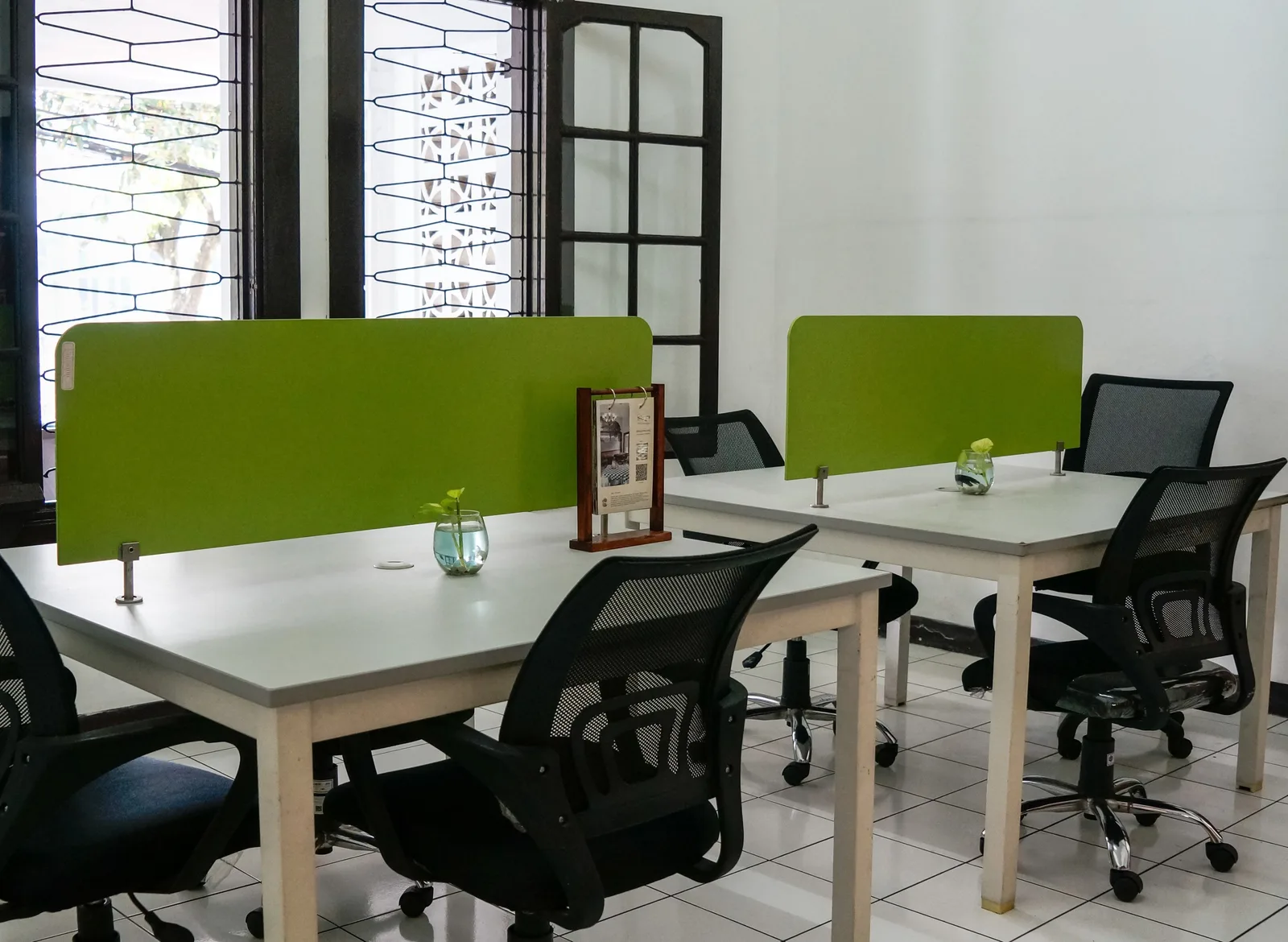
Layout is the strongest lever, and it has been measured: a study of open-plan partitions compared face-to-face, parallel, crossed, and orthogonal layouts at heights of 1.2, 1.5, and 1.8 meters. It used computer modeling and a field experiment following ISO 3382-3.
Desk layouts vs speech privacy
Face-to-face
- Speech privacy
- Least
- Partition 1.2 m
- Worst
- Partition 1.5 m
- Poor
- Partition 1.8 m
- Differences fade
- Fix
- Stop facing
Parallel
- Speech privacy
- Best at 1.2 m
- Partition 1.2 m
- Best
- Partition 1.5 m
- Good
- Partition 1.8 m
- Differences fade
- Fix
- Space apart
Crossed
- Speech privacy
- Best at 1.2 m
- Partition 1.2 m
- Best
- Partition 1.5 m
- Good
- Partition 1.8 m
- Differences fade
- Fix
- Space apart
The face-to-face layout produced the least speech privacy. Parallel and crossed layouts did best at the lowest partition height, and differences between layouts faded as partitions got taller.
The authors' conclusion is about geometry: space people apart and stop them facing each other. At a desk that translates into three ideas. Do not put the desk directly opposite a doorway. Do not put two desks face to face if either person takes calls. Put mass, not foam, between a desk and the room you are trying to protect.
Sound you are making
- Damp the desk surface before replacing anything on it.
- Put felt under the monitor stand, the lamp and the desk feet.
- Use a chair with quiet casters, or a rug, since chair movement carries through floors.
- Keep the phone and the mouse inside easy reach so you are not dragging things across the desk.
- Fix the rattle you have stopped noticing. There is usually one.
The room around the desk
Sound is only one part of the environment. The others interact with it. OSHA's page on the workstation environment covers lighting, glare, and ventilation together. Its advice against sitting directly under a vent that dumps air on you is both acoustic and comfort advice.
Air moving across a desk is a continuous noise source. People stop hearing it, but they never stop reacting to it.
Ideas that are usually oversold
Ideas usually oversold
- Thin foam tiles sold as soundproofing. They alter reflections in the room. They do not stop sound passing through a wall.
- Sealing a room completely, which trades noise for stale air.
- Buying a quiet device before finding out which sound the complaint is about.
Where to start
Pick one group, make one change, and give it a working day. The practical side of doing that is in what installation really involves, and the questions worth asking before spending are in questions to ask before buying.
Common questions
Why is there no numbered list of ideas here?
Do plants help with noise?
Are acoustic panels a waste of money?
What is the single most effective change?
In this guide
- The order silent workspace fixes should go in, and which jobs to skip in a rentalSilent workspace fixes should start with weatherstripping doors, then shared walls and ceilings, while renters should skip ductwork and window replacements.
- What is a silent workspace budget actually made of, bucket by bucket?No prices are quoted here. What a quiet workspace budget is actually made of, which costs recur, and how to get real numbers for your own building.
- Questions to ask before buying silent workspace gear, including rating gaps and masking levelsA buyer's question list for silent workspace gear: identify whether it absorbs, blocks, masks, or damps, why US noise ratings are absent, and set masking levels low.
- How to test whether a silent workspace change actually earned its placeA test you can run at home: fix the conditions, record from the listener's seat, and check comfort as well as sound before deciding a change earned its place.
- Silent workspace fixes loosen with time, so a short seasonal check keeps them workingQuiet setups drift over time. A short schedule for the parts that loosen, the seals that fail, and the habits that quietly return to how they were.